Corporate Travel Policies and Airport Parking: Expense Report Best Practices

Corporate Travel Policies and Airport Parking: Expense Report Best Practices

Your company handbook probably has seventeen pages about appropriate conference room behavior and exactly three sentences about how to properly expense the $67 you spent leaving your car at the airport for four days. Yet somehow, that parking receipt is the one thing that gets flagged, bounced back, and turned into a passive-aggressive email chain with someone from finance who signs their messages “As per company policy.” The math works out. The dates align with your trip. But the receipt doesn’t check some mysterious box that nobody explained during onboarding, and now you’re wondering if you’ll ever see that money again.

Why Airport Parking Expenses Get Rejected

Corporate finance departments reject parking expenses more often than you’d think, and it’s rarely because of the amount. They don’t have a problem with cheap parking at the Philadelphia Airport. The problem is documentation. A charge on your credit card statement that just says “Parking Services” without dates, location details, or an itemized receipt creates red flags for auditors and automated expense systems alike.

Most corporate travel policies require specific information that generic parking receipts simply don’t provide. You need proof of where you parked, when you parked, when you retrieved your vehicle, and ideally, confirmation that the expense aligns with your trip dates. A vague receipt that could theoretically be from any random Tuesday afternoon won’t cut it when you’re trying to expense four days of business travel parking.

The rise of automated expense management systems has made this worse in some ways. Software can flag inconsistencies humans might overlook. If your flight landed on Thursday but your parking receipt shows a Friday exit, the system catches it. If the dates don’t match your trip itinerary, you’re getting a rejection notification before lunch.

What Makes a Parking Receipt Expense-Compliant

Finance departments aren’t being difficult for the sake of it. They need documentation that satisfies both company policy and tax regulations. A proper parking receipt for expense reporting should include several key elements that prove the expense was legitimate, necessary, and directly tied to business travel.

Essential components of an acceptable parking receipt:

  • Facility name and location to verify proximity to the airport
  • Entry and exit dates with timestamps showing duration of stay
  • Itemized charges showing daily rate breakdown
  • Payment method confirmation matching your corporate card
  • Clear total amount that reconciles with your credit card statement

Some companies have additional requirements like pre-approval for parking expenses over a certain threshold or mandatory use of preferred vendor programs. Before your next trip, take ten minutes to actually read your company’s travel policy. Most of them are searchable PDFs now, so you can find the parking section quickly without wading through the entire 47-page document.

How to Document Parking for Multiple-Day Business Trips

Extended business trips create their own documentation quirks. A parking receipt that shows you left your car for seven days while your approved travel was only four days will trigger questions. Maybe you extended your trip for personal reasons, which is fine, but now you need to calculate the business portion versus personal portion for expense purposes.

Best practices for documenting extended parking:

  1. Save your confirmation email that shows when you originally booked and for how many days, providing baseline documentation of your intended business travel.
  2. Keep your flight itineraries readily accessible so you can prove the parking dates align with your business trip, not personal extensions before or after.
  3. If you extend your stay personally, calculate the business days separately and only expense that portion, making notes in your expense report about the split.
  4. Photograph your parking receipt immediately when you retrieve your vehicle, before it gets buried in your luggage or the thermal ink fades.
  5. Submit expenses promptly while trip details are fresh in your mind and before you forget crucial context that might be needed for approvals.

Some business travelers keep a dedicated folder in their email for travel confirmations. Every parking reservation, flight booking, and hotel confirmation goes there automatically. When expense report time comes, everything is in one place rather than scattered across your inbox, spam folder, and that text message thread where your colleague sent you the facility address.

Special Considerations for Frequent Business Travelers

If you’re flying for work multiple times per month, the parking expense process becomes part of your routine. But frequent travel creates its own challenges. Receipts start blending together. You genuinely can’t remember if the $87 charge was from the Denver trip or the Boston trip two weeks earlier.

This is where loyalty programs and consistent vendor choices pay dividends beyond just rewards points. Using the same parking facility for the same airport every time creates a predictable pattern that finance departments recognize. Your expense reports become easier to process because there’s consistency and history.

Many off-site parking facilities offer corporate account options that can streamline the entire process. Instead of individual receipts for every trip, you might get monthly statements that itemize all your trips, making expense reporting dramatically simpler. Some even allow direct billing to corporate accounts, removing you from the reimbursement process entirely.

Why Off-Site Parking Often Makes More Sense for Business Travel

Here’s something most corporate travel policies don’t explicitly state but tacitly encourage: choosing cost-effective options when they don’t compromise convenience or safety. Off-site airport parking facilities typically cost 30-50% less than on-site airport parking, which means your parking expenses stay well within policy limits without requiring special approvals.

The documentation from professional off-site facilities is often superior to what you get from on-site airport parking. These businesses understand that business travelers need detailed receipts. They provide confirmation emails, clear entry and exit documentation, and customer service contacts if you need duplicate receipts later.

The shuttle service that off-site facilities provide is considered part of the parking expense, not a separate ground transportation charge. This simplifies your expense categorization and keeps everything under one line item. You’re not trying to explain why you have both a parking charge and a separate shuttle charge when company travel policy expects one combined expense.

Making Jet Stream Parking Work for Your Expense Reports

When you park with Jet Stream Parking, you’re not just getting secure parking and reliable shuttle service. You’re getting documentation designed with business travelers in mind. The reservation system provides clear confirmation emails that serve as your first layer of expense documentation. These confirmations include dates, pricing, and facility details that satisfy most corporate travel policies.

Upon arrival, you receive professional service that business travelers expect. The shuttle drivers meet you at your vehicle, help with luggage, and get you to your terminal efficiently. When you return, that same level of service continues. You’re dropped off directly at your vehicle, and you receive a detailed receipt that breaks down your parking duration and charges clearly.

The receipt you get isn’t some faded thermal paper that will be unreadable by the time you file your expense report. It’s a proper document with all the information finance departments require: facility name, dates, itemized charges, and payment confirmation. If you need a duplicate for any reason, customer service can provide it quickly without the runaround that some facilities give you.

Jet Stream Parking features that simplify business expense reporting:

  • Online reservation system creates automatic confirmation emails with full trip details and pricing breakdowns
  • Clear, itemized receipts that include all required information for corporate expense compliance and tax documentation
  • Covered and uncovered parking options at different price points to match various corporate travel policy limits
  • Consistent pricing structure that helps you predict and stay within your company’s daily parking allowances
  • Professional customer service that can provide duplicate receipts or documentation if originals are lost or need clarification

The covered parking option deserves special mention for business travelers. If your company travel policy includes provisions for protecting company vehicles or if you’re driving a rental car with damage waiver considerations, covered parking provides documentation that you took reasonable precautions. This can matter for both expense approval and liability questions.

Handling Parking Expenses When Travel Plans Change

Flight cancellations, delays, and last-minute itinerary changes create expense reporting nightmares. You reserved parking for four days but your return flight got cancelled and you didn’t retrieve your car until day five. Now your parking receipt doesn’t match your original travel approval, and you need to explain the discrepancy.

The key is documentation and communication. Save all flight change confirmations, delay notices, and rebooking emails. These prove that the extended parking wasn’t optional or personal. Most finance departments are understanding about travel disruptions if you can demonstrate they were outside your control.

If you’re interested in parking long-term at Philadelphia Airport, Facilities like Jet Stream Parking’s make this feasible due to flexible policies. If you know you’ll be staying an extra day due to delays, contacting the parking facility to extend your reservation creates a paper trail. A modified reservation confirmation shows you handled the change responsibly and kept the company informed through proper channels.

Simplify Your Next Business Trip

Corporate travel has enough complexity without expense report drama adding to the stress. Jet Stream Parking provides business travelers with the documentation, reliability, and cost-effectiveness that corporate policies demand. Our detailed receipts, professional service, and convenient reservation system make expense reporting straightforward. Book your next business trip parking and experience airport parking that works as hard as you do.

The Psychology of Airport Parking: The Anxiety Is Real (And How You Can Avoid It)

The Psychology of Airport Parking: The Anxiety Is Real (And How You Can Avoid It)

You know that nagging feeling when you’re somewhere on hour three of your return flight, squeezed between a snoring stranger and a very chatty toddler, and suddenly your brain decides right then is the perfect time to wonder if you’ll actually remember where you parked? That low-grade panic that starts somewhere in your chest and spreads outward isn’t just in your head. Well, technically it is in your head, but it’s also completely valid.

The Science Behind Parking Lot Panic

Our brains weren’t designed for the modern world of massive parking facilities. For thousands of years, humans relied on spatial memory tied to distinctive landmarks and familiar environments. Drop someone in a sea of identical parking spaces under fluorescent lighting, add the stress of catching a flight, and you’ve basically created the perfect recipe for memory failure.

Research in cognitive psychology shows that stress hormones actually interfere with memory formation. When you’re rushing to catch your flight, worried about TSA lines, mentally reviewing your packing list, and trying to remember if you turned off the coffee maker, your brain isn’t prioritizing which row you parked in. It’s in survival mode, and frankly, parking space location doesn’t register as survival-critical information.

The parking lot environment itself works against you. Most facilities are deliberately designed for efficiency, not memorability. Rows look identical. Lighting is uniform. The concrete all matches. Your brain struggles to create the distinctive mental anchors it needs to form solid memories.

Why We Forget Where We Parked

Memory formation requires attention, and attention is a limited resource. When you’re parking before a trip, your mind is typically occupied with about seventeen other things. The actual act of parking becomes what psychologists call an “automatic behavior,” something you do without conscious thought. And what doesn’t get conscious attention rarely makes it into long-term memory.

Common mental distractions during pre-flight parking:

  • Flight time concerns and schedule anxiety
  • Luggage inventory and gate information
  • Travel documents and ID verification worries
  • Weather at your destination
  • Work or family obligations you’re leaving behind

Add to this the fact that you might not return to that parking spot at Philadelphia Airport for days or even weeks. Your brain has processed thousands of other visual experiences in the meantime. That mental image of your parking location has been buried under layers of new memories, making retrieval even harder.

Time distortion plays a role too. The few minutes you spend parking your car before a trip feel rushed and compressed. But the journey back, after a long flight when you’re tired, feels endless. This temporal asymmetry makes the parking experience feel like it happened in a different lifetime.

The Emotional Weight of Vehicle Anxiety

Lost in a parking lot, you’re not just geographically confused. You’re emotionally compromised. There’s embarrassment (what kind of adult can’t find their own car?), frustration (I just want to go home), and genuine worry (what if someone stole it and that’s why I can’t find it?).

For many travelers, their vehicle represents security. It’s familiar territory in an unfamiliar process. The car is what takes you home after your journey. Not being able to locate it triggers a primal anxiety about being stranded.

Solo travelers often experience this more intensely. Without a travel companion to share the cognitive load of remembering logistics, the entire burden of spatial memory falls on one person. Women traveling alone may feel additional vulnerability when searching parking lots late at night.

How Different Parking Layouts Affect Memory

Not all parking facilities are created equal, and their design significantly impacts your ability to remember your spot. Understanding these differences helps you appreciate why some parking experiences feel more stressful than others:

Parking layout memory challenges:

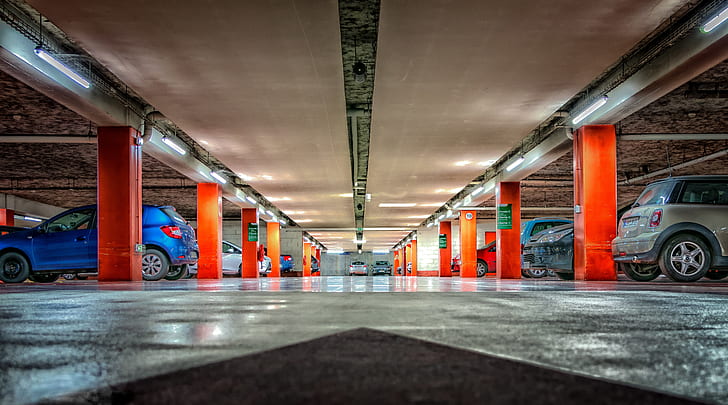
  • Multi-level garages create the highest memory burden because vertical space is harder for brains to encode than horizontal layouts, and every level looks nearly identical
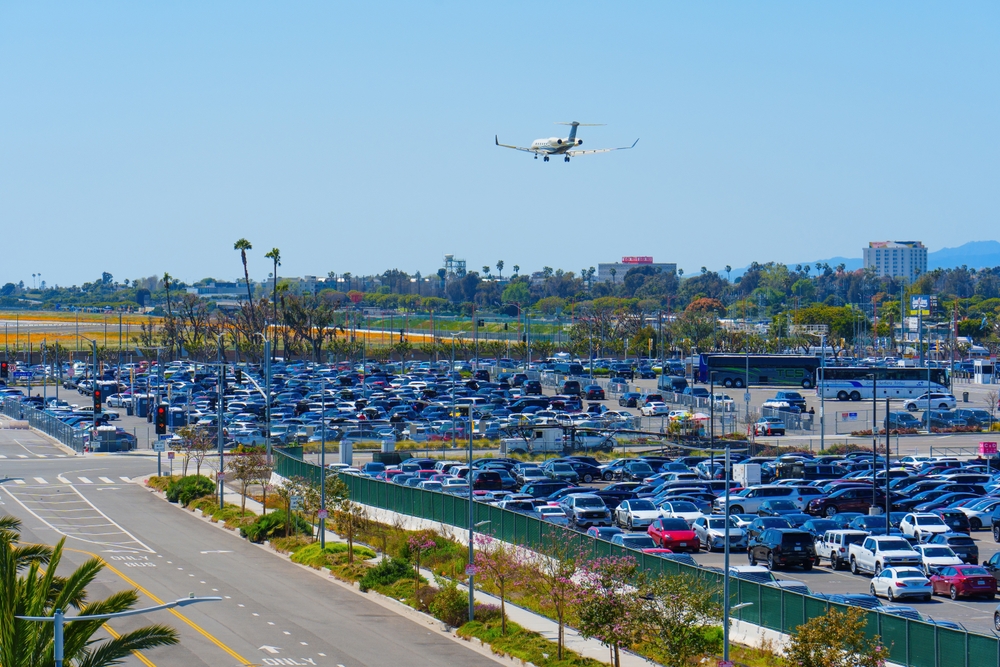
  • Open lots with numbered rows offer moderate difficulty since the lack of distinctive features makes rows blend together in your memory
  • Covered structures with zone systems provide some mental anchors but can still create confusion when zones lack unique characteristics
  • Smaller lots with natural landmarks work best with human memory because boundaries and features give your brain something concrete to latch onto
  • Valet service eliminates memory burden entirely by removing the responsibility from travelers

The worst offenders are parking facilities that use only numbers or letters for identification. “You’re in Row J, Space 47” means nothing to your brain without additional context. The information is abstract rather than visual or spatial.

Practical Solutions That Actually Work

Understanding why we forget where we parked is only helpful if we can do something about it. The good news is that several evidence-based strategies can dramatically reduce parking anxiety.

Five proven methods to remember your parking location:

  1. Take a photo immediately after parking. Your phone already has a timestamp and often location data embedded in the image. Bonus points if you capture a landmark or row marker in the shot.
  2. Create a memorable mental story. Instead of trying to remember “C4,” think “C is for coffee, and I need 4 cups after this flight.” Weird, specific, or humorous associations stick better than dry facts.
  3. Walk the route to the shuttle pickup and look back. This creates bidirectional memory. You’re not just remembering where you parked, but also what the path back looks like.
  4. Use voice notes on your phone. Speak your parking location out loud while recording. “I’m in the covered lot, purple level, third row from the elevator, blue Honda Civic.” The act of verbalizing helps encode the memory.
  5. Look for something unique nearby. Maybe there’s a light post with a dent, a painted curb, or a tree near your space. Distinctive features give your memory something to grab onto.

Some travelers swear by dropping a pin in their phone’s maps app. This works well if you remember to do it, though cellular service can be spotty in some parking structures.

How Jet Stream Parking Eliminates Location Anxiety

Understanding the psychology of parking stress is only valuable if there’s a practical solution. At Jet Stream Parking, we’ve built our entire system around reducing the mental burden on travelers so you can focus on your journey instead of worrying about finding your car.

The cornerstone of our approach is the reminder card system. When you arrive, our shuttle drivers meet you right at your vehicle and provide you with a physical card that clearly indicates your exact parking location. This simple piece of card stock becomes your backup memory, tucked safely in your wallet next to your ID throughout your trip. No apps to download, no pins to drop, no memory tricks required.

Our facility design works with your brain rather than against it. Both our covered structure and open-air lot feature clear signage and ample lighting that creates visual landmarks. You’re not navigating a confusing maze of identical concrete levels. The layout is intuitive, and the environment feels secure, which reduces the baseline stress that interferes with memory formation in the first place.

The Return Journey Made Simple

When you land and collect your luggage, the last thing you want is to wander around a parking lot clicking your key fob. Our shuttle service eliminates that anxiety completely. Simply call our team, let them know you’ve returned, and our drivers will pick you up from the terminal.

Here’s where the reminder card proves its worth. You reference your parking location, share it with the driver, and they take you directly to your vehicle. No guessing, no searching, no stress. Our drivers even help with luggage unloading, so you can get on the road and head home without any additional hassle.

This system creates redundant safety nets for your memory. You have the physical card. You have helpful staff who know the facility. You have a shuttle that drops you at your exact spot rather than a general area. Each layer reduces anxiety and ensures that even on your most exhausted, brain-fogged return, you’ll get back to your car quickly and easily.

Why Location Reminders Matter More Than You Think

That simple reminder card might seem like a minor amenity, but it addresses one of the most common pain points in the airport parking experience. Psychology research confirms that external memory aids are incredibly effective. They free up mental resources for other tasks and eliminate the low-level background anxiety of trying not to forget important information.

Some travelers photograph their reminder card as an additional backup. Others set a reminder on their phone: “Retrieve parking info from wallet before leaving airport.” The specific method matters less than having a reliable system.

Modern technology has helped too. Some parking apps let you save your spot digitally, send you reminders, and even guide you back to your vehicle. But these solutions only work if the parking facility has implemented the technology and you’ve downloaded the app before parking.

The Simple Elegance of a Good System

At its core, parking anxiety stems from uncertainty. You’re uncertain if you’ll remember where you left your car. You’re uncertain how long it will take to find it when you’re tired and ready to be home. You’re uncertain if you’ll look foolish wandering around clicking your key fob.

The solution isn’t just physical infrastructure or technology. It’s a combination of smart facility design, helpful staff, and simple systems that align with how human memory actually functions. When a parking service understands the psychology behind location anxiety and builds solutions directly into their process, everybody benefits.

Good short-term airport parking at the Philadelphia Airport or beyond should be forgettable in the best way. Not because you forgot where you parked, but because the system was so smooth you didn’t have to stress about it in the first place.

Take the Stress Out of Your Next Trip

Location anxiety doesn’t have to be part of your travel experience. At Jet Stream Parking, our reminder card system, attentive shuttle drivers, and well-designed facility take the guesswork out of parking. Book your reservation today and experience airport parking designed around how travelers actually think and feel.

The Economics of Airport Parking: Why Off-Site Facilities Can Charge 50% Less

The Economics of Airport Parking: Why Off-Site Facilities Can Charge 50% Less

You pull into the airport parking structure, watch the rate board display $35 per day, and wonder why the lot three miles down the road charges $15 for the exact same service. The price gap isn’t random, and it’s not about quality. It’s pure economics, shaped by real estate values, operational costs, and business models that differ as dramatically as the prices themselves.

Understanding these financial mechanics reveals why off-site parking facilities consistently undercut airport rates by half or more while often providing superior service. This guide breaks down every factor that creates the price difference and shows you how to make smarter parking decisions.

The Real Estate Factor: Location Isn’t Everything

Airport property ranks among the most valuable commercial real estate in any region. Every square foot of land within airport boundaries generates significant opportunity cost. When airports dedicate acres to parking, they sacrifice potential revenue from terminals, concessions, cargo facilities, or airline operations that generate substantially higher returns per square foot.

This land value pressure translates directly to parking rates. Airports must justify parking’s use of premium real estate by extracting maximum revenue from every space. The calculation becomes simple: if a parking spot occupies 180 square feet and the land could generate $500 per square foot annually through alternative uses, that parking space must produce enough revenue to justify its existence.

Off-site facilities operate on dramatically cheaper land. Properties located just miles from airports cost a fraction of on-airport real estate. This fundamental difference in land acquisition and carrying costs creates the foundation for lower pricing that no amount of operational efficiency could match.

The financial advantages of off-airport locations include:

  • Lower property acquisition costs that reduce initial capital investment by 60-80% compared to airport property values
  • Reduced property tax burden since off-airport parcels typically fall under standard commercial tax rates rather than airport authority assessments
  • Greater expansion flexibility allowing facilities to scale operations affordably as demand grows without navigating airport development restrictions

The Infrastructure Investment Gap

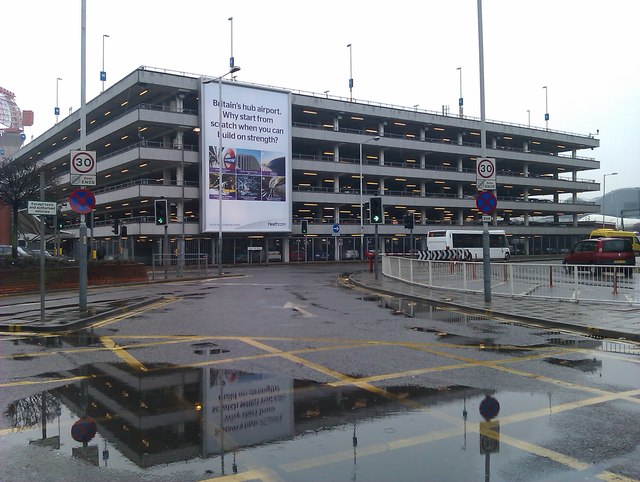
Walk through an airport parking structure and you’ll notice sophisticated systems that off-site lots often don’t require. Multi-level concrete structures with integrated elevators, extensive lighting networks, advanced ventilation systems, and fire suppression equipment represent massive capital investments.

Airport parking garages cost $15,000 to $30,000 per parking space to construct, depending on complexity and location. This astronomical per-space cost must be recovered through parking fees over the structure’s lifetime. Even amortized over 30 years, the infrastructure investment alone adds $8 to $15 to the daily rate before considering any operational expenses.

Off-site facilities typically operate with surface lots or simpler covered structures costing $2,000 to $5,000 per space. Some premium off-site operators invest in enclosed parking, but even these facilities cost less than airport structures due to simpler designs and lower construction costs on non-airport property.

The infrastructure savings extend beyond initial construction. Maintaining multi-story concrete structures requires specialized expertise and expensive materials. Surface lots need periodic resealing and line painting but avoid the structural inspections, elevator maintenance, and complex mechanical systems that drive up airport parking operational costs.

Operational Cost Differences

Airport operations carry inherent cost premiums that off-site facilities avoid entirely. Airport parking operators navigate complex regulatory environments, extensive security requirements, and coordination with airport authorities that add layers of expense.

Labor and Staffing

Airport parking employs extensive staff for toll collection, security, maintenance, and customer service distributed across multiple locations and levels. Union contracts common in airport employment often mandate higher wages and more generous benefits than comparable positions at off-site facilities.

Off-site operators optimize staffing through centralized operations. One-stop parking at Philadelphia Airport allows for everything to run efficiently with a handful of employees managing check-in, shuttle operations, and basic maintenance. The simplified layout of surface parking eliminates the need for staff stationed across multiple garage levels.

Security Requirements

Airports impose strict security protocols on all operations, including parking facilities. These requirements necessitate expensive screening equipment, dedicated security personnel, and compliance with Transportation Security Administration standards that add operational overhead.

Off-site facilities implement security appropriate for protecting parked vehicles, which costs substantially less than airport-level protocols. Fencing, lighting, surveillance cameras, and periodic patrols provide effective security without the regulatory burden and expense of airport-mandated measures. Jet Stream Parking demonstrates this approach with 24/7 security monitoring that protects vehicles effectively while maintaining cost efficiency that enables lower pricing.

Regulatory Compliance

Airport parking operations navigate extensive regulations governing everything from environmental standards to accessibility requirements. Compliance demands dedicated personnel, regular audits, and documentation systems that represent significant ongoing expense.

While off-site facilities certainly maintain high standards and follow applicable laws, they avoid the additional layers of airport-specific regulations. This streamlined compliance environment reduces administrative overhead and associated costs.

Revenue Model Variations

Airport parking operates under fundamentally different revenue pressures than off-site facilities. Airports view parking as one element in a complex revenue portfolio that includes terminal concessions, landing fees, rental car operations, and retail leases. Parking must generate returns that satisfy airport authorities, bond holders, and political stakeholders.

This pressure creates pricing that maximizes revenue extraction rather than market competitiveness. Airport parking can charge premium rates because of convenience and captive demand. Travelers arriving by personal vehicle have already committed to parking; the decision point happened before they reached the airport.

Off-site facilities compete in a genuinely competitive market. Multiple operators vie for customers who can easily compare prices and services. This competition enforces pricing discipline and rewards operators who deliver superior value. The business model succeeds through volume rather than margin, requiring competitive pricing to attract the customer numbers that generate profitability.

Key revenue model differences include:

  • Volume-based profitability where off-site facilities prioritize occupancy rates and customer acquisition over per-transaction margin
  • Customer retention focus that emphasizes loyalty programs and repeat business rather than capturing one-time premium pricing from convenience-driven customers
  • Ancillary revenue opportunities from add-on services like car washes, oil changes, or vehicle detailing that airports typically don’t offer in parking contexts

The Monopoly vs Competition Dynamic

Most airports limit competition through exclusive operating agreements or by operating parking directly. This controlled environment eliminates pricing pressure and allows rates to rise based on demand rather than competitive forces.

Off-site parking thrives in competitive markets where multiple operators push each other toward better service and lower prices. This competition benefits consumers through constant pressure for operational efficiency and customer-focused improvements.

The competitive dynamic explains why off-site facilities often exceed airport parking in service quality despite lower prices. When your business depends on voluntary customer choice rather than locational convenience, excellence becomes essential rather than optional.

Cost Comparison Breakdown

Cost Category Airport Parking Off-Site Facility Impact on Daily Rate
Land/Property Cost $75-150 per sq ft $8-20 per sq ft $8-12 savings
Construction Cost per Space $15,000-30,000 $2,000-5,000 $5-10 savings
Annual Property Tax 3-5% of assessed value 1-2% of assessed value $2-4 savings
Labor Costs Premium wage scales Market competitive wages $3-5 savings
Security Requirements TSA compliance level Standard commercial $2-3 savings
Regulatory Compliance Extensive airport rules Standard business licensing $1-2 savings
Infrastructure Maintenance Complex multi-level systems Simple surface lot upkeep $2-4 savings
Total Daily Rate Impact $35-45 $15-20 $20-25 savings

The Value Proposition Reality

The pricing difference between airport and off-site parking exists because of structural economic factors, not service quality compromises. Off-site facilities leverage lower real estate costs, simpler infrastructure, reduced regulatory burden, and competitive market dynamics to deliver parking at genuinely lower cost.

Many travelers discover that off-site parking actually provides superior experience. Covered parking options protect vehicles from weather. Frequent shuttle service often proves faster than hiking across massive airport parking structures. Friendly staff who remember repeat customers create personal connections impossible in high-volume airport operations.

The business model works precisely because it delivers legitimate value rather than cutting corners. Facilities succeed by keeping customers happy enough to return and recommend the service to others. This word-of-mouth dependence enforces quality standards that benefit travelers.

Making Smart Parking Choices

Understanding the economics behind pricing helps travelers make informed decisions. The price difference between airport and off-site parking reflects genuine cost advantages, not inferior service. Evaluating facilities based on security features, shuttle frequency, and customer reviews reveals which operators deliver exceptional value.

When you’re planning on parking at Philadelphia Airport long-term, follow this evaluation process:

  • Verify security infrastructure by checking for perimeter fencing, camera coverage specifications, and whether the facility employs on-site security personnel around the clock
  • Test shuttle reliability through customer reviews mentioning wait times, driver professionalism, and how the facility handles peak travel periods
  • Examine reservation policies including cancellation flexibility, guaranteed space availability, and how the facility manages flight delays or early returns
  • Compare total costs by calculating not just the daily rate but any booking fees, premium location charges, or add-on service costs
  • Assess location accessibility considering drive time from your home, ease of highway access, and whether the route works well for your typical departure times

Key factors to consider when choosing off-site parking:

  • Security measures including fencing, lighting, surveillance coverage, and 24/7 monitoring that protect your vehicle throughout your trip
  • Shuttle service reliability with frequent departures, professional drivers, and luggage assistance that eliminate stress from your airport experience
  • Reservation flexibility allowing you to book in advance for guaranteed spots while accommodating flight changes or delays without penalty

Questions Surrounding Off-Site Parking Economics

If off-site parking is cheaper, does that mean it’s less secure than airport parking?

Not at all. The price difference comes from real estate and infrastructure costs, not security measures. Quality off-site facilities invest in fencing, 24/7 surveillance, on-site security personnel, and well-lit environments. Many travelers find off-site lots more secure because dedicated parking operators focus entirely on vehicle protection, unlike airports where parking is just one of many operations.

How can off-site facilities afford to include free shuttle service and still charge less?

The shuttle cost is minimal compared to the savings from cheaper land and simpler parking infrastructure. A few shuttle buses and drivers cost less than the debt service on building equivalent capacity in an airport garage. The shuttle actually enables the business model by making the off-site location viable, rather than adding prohibitive expense.

Will off-site parking always be cheaper, or could prices eventually match airport rates?

The structural cost advantages of off-site locations are permanent. As long as airport real estate remains more valuable than nearby commercial property, off-site facilities will maintain significant cost advantages. Competition between multiple off-site operators also keeps prices in check in ways that monopolistic airport parking doesn’t experience.

Choosing Value Without Compromise

The economics of airport parking reveal why off-site facilities consistently charge 50% less while often delivering superior service. Lower real estate costs, simpler infrastructure, streamlined operations, and competitive market forces combine to create genuine savings that benefit travelers without sacrificing quality or security.

Jet Stream Parking exemplifies this value proposition with secure 24/7 monitored facilities, complimentary shuttle service, and affordable rates that prove off-site parking delivers exceptional value. Ready to experience the difference? Book your parking reservation and discover why smart travelers choose off-site facilities for every trip.